
Why informal skills matter more than most career advice acknowledges, and how we approach the gap.
Imagine a senior analyst who has just been told they are being considered for a team lead role. Their work is excellent. Every stakeholder who has worked with them directly rates them highly. But in cross-functional meetings — the ones where direction actually gets set — their contributions seem to dissolve into the air. They speak clearly. The ideas are sound. Yet nothing sticks.
This is not an unusual situation. It is, in fact, remarkably common among capable professionals approaching their first leadership transition.
The explanation almost never lies in competence. It lies in a set of skills that sit outside the formal curriculum of professional development — skills nobody names explicitly because organisations tend to assume they either exist already or will be absorbed through exposure. Neither assumption is reliable.
These skills include reading the informal dynamics of a room, knowing how to frame an idea so it lands with a particular audience, understanding which relationships to invest in before a decision is being made, and holding your position constructively under pressure. Each one is learnable. None of them appear in a job description.
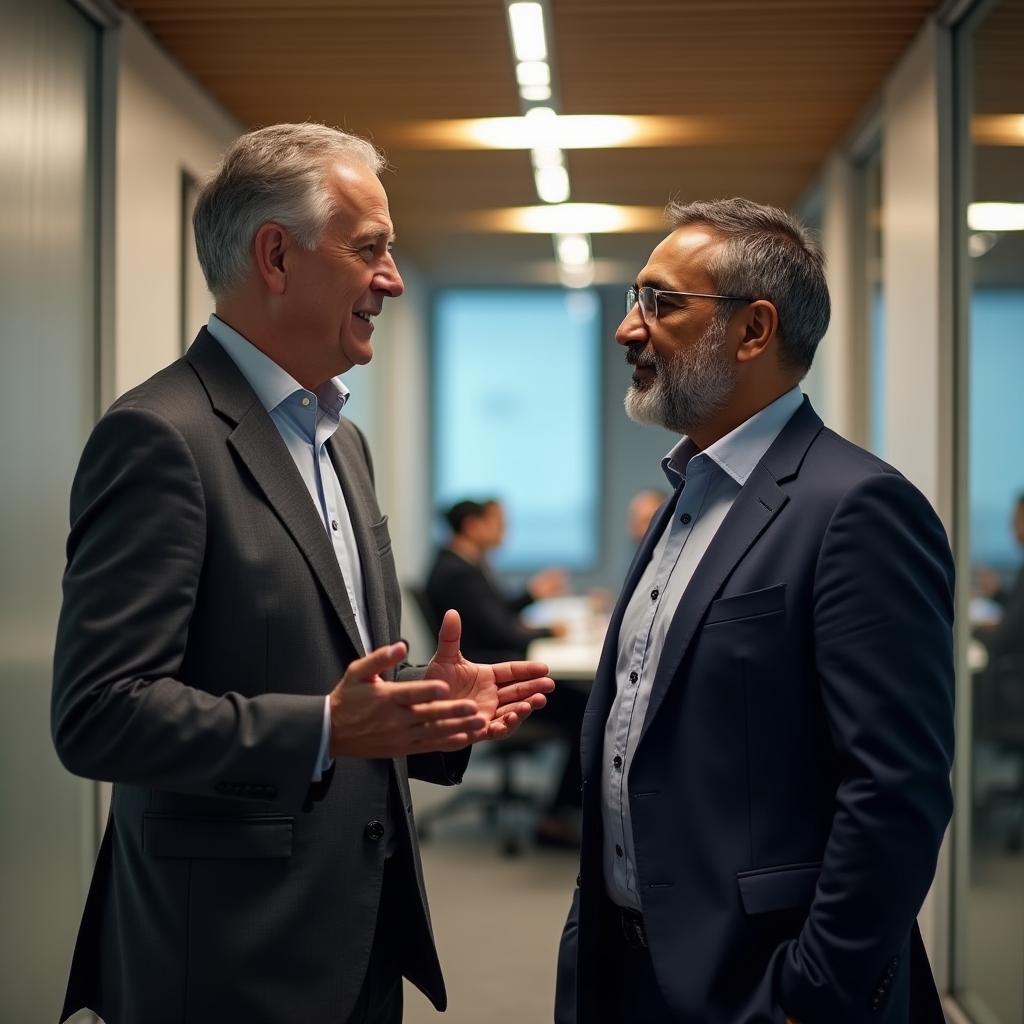
The phrase "soft skills" has a mildly apologetic quality to it, as though the things it describes are somehow less rigorous than the hard ones. We do not find this framing useful.
The ability to understand how influence actually moves through an organisation — through corridors and coffee conversations and pre-meeting alignments — is a form of organisational literacy. It can be studied. It can be mapped. It can be developed through deliberate practice.
What makes it feel intangible is that the rules are unwritten and context-specific. The way influence operates in a large financial services firm is different from how it operates in a regional NHS trust. Both have informal structures. Both reward certain kinds of presence and penalise others. The skill is in reading your specific environment accurately, not in applying a generic model.
This is why coaching — rather than training — is the appropriate vehicle. A workshop can introduce frameworks. It cannot do the diagnostic work of mapping your particular landscape and then building skills within that context.
Every engagement starts with your landscape, not ours. The frameworks are tools — they serve your context, not the other way around.
We begin each engagement by spending time understanding the specific environment the client is operating in. What kind of organisation is it? How are decisions actually made? Who are the key relationships, and what is the current quality of those relationships?
This diagnostic phase is not administrative. It is substantive. The map we build in the first two sessions shapes everything that follows, because the skills we develop need to work in your environment — not in a hypothetical one.
From there, the coaching moves into deliberate skill-building. This means practising real scenarios, debriefing actual meetings, working through specific upcoming challenges, and building the kind of reflective capacity that makes improvement self-sustaining over time.
We do not offer a fixed curriculum that every client follows. We offer a set of frameworks and a structured process, applied with enough flexibility to meet the situation where it actually is.
We do not apply generic frameworks before understanding your specific organisational environment. The diagnostic work is the foundation everything else is built on.
We work on behaviours and practices, not character traits. The goal is to add specific capabilities, not to reshape who you are as a person.
Skills only become habits through application. We structure coaching around real challenges you are currently facing, not case studies from elsewhere.
Good coaching requires honest feedback. We will tell you what we observe, including things that may be uncomfortable to hear. Clarity serves you better than comfort here.
A first conversation is informal and exploratory. We will listen carefully before we say anything prescriptive.
Start a Conversation